
Home / Questions
Physiotherapy Questions, Answered
Everything patients ask us most, from booking and parking to what happens with a particular problem. If yours is not here, send it over.
Booking and appointments
How long is an appointment and how many will I need?
The first appointment is long enough for me to take a full history, examine you and explain what I have found before you leave, rather than a rushed slot. I will give you an honest estimate at the assessment rather than an open ended plan, and if you end up needing fewer sessions than I thought, I will say so.
Do I need a referral?
No. You can book directly with us for private appointments. If you are using medical insurance, we recommend checking with your provider about their specific referral requirements.
How quickly can I be seen?
Usually within a few days. We hold appointments until 9pm Monday to Friday plus Saturday and Sunday.
What does the first appointment involve?
A conversation about what has been going on, a thorough assessment that looks beyond the painful area, a clear explanation, and a plan built around your goals.
Can I get an appointment around work?
Yes. Appointments run until 9pm Monday to Friday, plus Saturday and Sunday. For anyone commuting out of Gillingham that usually means you do not have to take time off, and the clinic is close enough that an evening slot is realistic.
Do you take insurance?
Yes, we work with all the major providers including Bupa, AXA Health, Aviva and Vitality.
How soon after an injury should I be seen?
Sooner is better, ideally within the first week. Early assessment gets the grading right, which sets a realistic timeline, and stops the two common mistakes: resting far too long, or returning far too early. The clinic is in Rainham with evening slots, so it does not have to wait for a day off.
What does private physiotherapy cost?
Current fees for an assessment and for follow up sessions are shown on the booking page, so you can see exactly what you are committing to before you book. If you would rather check we are the right fit first, the 10 minute call is free.
How is this different to a physio chain?
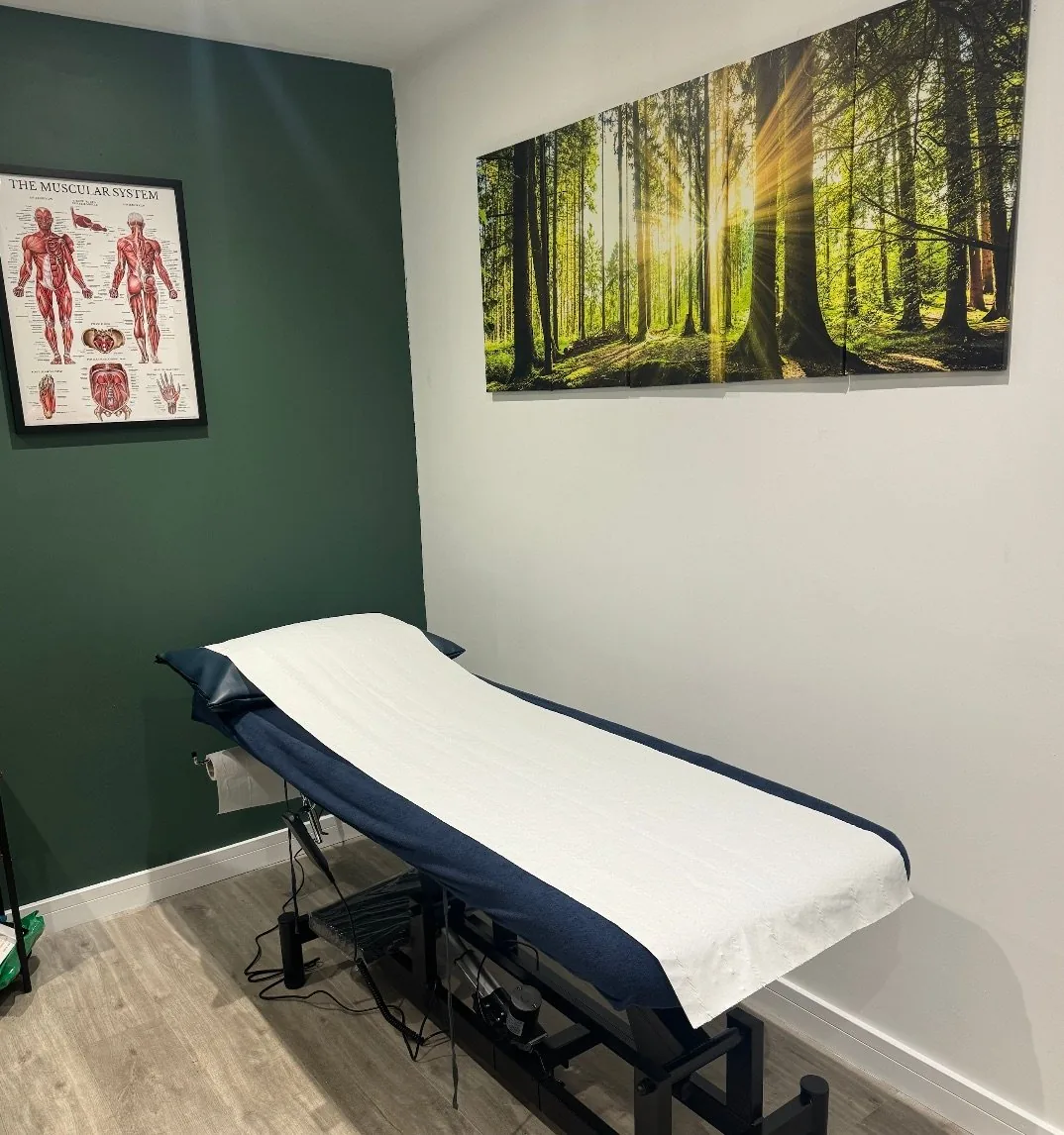
You see the same MACP accredited physiotherapist at every appointment, in a private treatment room, for long enough to be assessed in full. Nothing is handed over to a different clinician halfway through your recovery.
Do you do evening appointments?
Yes, until 9pm Monday to Friday, plus Saturday and Sunday. Most commuters do not need to take time off work.
Getting to the clinic
Where exactly are you?
9 Eastwood Meadow, Rainham, Gillingham, Kent ME8 8FA, with dedicated parking directly outside. Easily reached from Gillingham, Chatham, Rochester and across Medway.
How far is the clinic from Gillingham?
Roughly ten minutes from Gillingham town centre along the A2, and closer to five from Hempstead Valley.
Is there parking?
Yes, dedicated parking directly outside the clinic. It sounds minor until you are travelling in with acute back pain and the alternative is a town centre car park and a walk.
Is it worth travelling from Chatham or Rochester?
Roughly fifteen to twenty minutes from Chatham, Rochester and Strood. Whether that is worth it is your call, but the appointment is long enough to get somewhere and you see the same physiotherapist every time.
Do you cover all of Medway?
Yes. The clinic is in Rainham and patients travel in from Gillingham, Chatham, Rochester, Strood, Hempstead, Walderslade and the surrounding villages.
Back pain and sciatica
How long does back pain take to settle?
Most straightforward episodes improve noticeably within two to six weeks once the plan is right. If you have had it for years it takes longer than that and I will not pretend otherwise, but you should understand what is driving it from the first session.
Do I need a scan first?
Usually not. Scans often show changes that are entirely normal for your age and do not correlate well with pain. Josh is trained to identify the small number of cases where imaging genuinely changes management.
Can you help if I have had back pain for years?
Yes, and it is a large part of what we do. Persistent pain needs a different approach to a fresh injury, which is exactly what the assessment is for.
How do you know it is sciatica and not just back pain?
Sciatica is nerve pain, so it behaves differently: it travels below the knee, often with pins and needles, numbness or weakness, and it responds to positions that load or unload the nerve. The assessment includes neurological testing to establish whether the nerve is genuinely involved, because that changes the plan entirely.
How long does sciatica last?
Most of the sciatica I see settles substantially within six to twelve weeks. If you have had it longer than that it usually still responds, it just needs a more graded approach and a little more patience.
Will I need surgery?
The large majority of people never do. Surgery is generally considered only where symptoms fail to respond over time or there is progressive neurological loss.
Can I exercise with sciatica?
Usually yes, and often you should. The key is the type and dose, which is what the assessment establishes.
Massage helps for a few days then it comes back. Why?
Massage reduces muscle tone and feels good, but it does not change how much load your back can tolerate. If nothing else changes, the tissue is back where it started within a week. Hands on work still has a place here, but as a way to make the loading part possible, not as the treatment on its own.
Should I rest or keep moving?
Almost always keep moving, within sensible limits. Prolonged rest tends to make back pain worse. Part of the assessment is working out what you can safely keep doing.
Is sciatica serious?
In most cases it settles well with the right management. The assessment establishes whether the nerve is genuinely involved and what is irritating it, so you know what you are dealing with from the first session.
Neck, shoulder and knee
Do you treat meniscus tears and post surgical knees?
Yes. Runner's knee treatment, meniscus tear treatment, knee replacement rehabilitation and ACL rehabilitation are all handled here, with the plan matched to the tissue and the stage.
Why do you assess my hip and ankle for knee pain?
Because the knee sits between them and takes the consequences of how both behave. A stiff ankle or a weak hip changes what the knee has to absorb every step. Treating only the painful joint is why a lot of knee pain keeps returning.
Can I still run with knee pain?
Often yes, with modification. Complete rest tends to reduce capacity further. The assessment establishes what dose your knee currently tolerates.
Can neck pain cause headaches?
Yes, very commonly. Cervicogenic headaches originate in the upper cervical spine and often present as pain at the base of the skull spreading forward. They typically respond well to treatment directed at the neck.
My neck pain came on with no injury. Is that normal?
Very. Most neck pain has no single moment behind it. Sustained postures, workload, stress and sleep all change how tolerant the neck is, and the pain often appears once tolerance drops below what an ordinary day demands. That is diagnosable and treatable. It just is not an injury.
Do you treat whiplash?
Yes. Graded, guided reintroduction of movement is generally far more effective than rest or immobilisation.
Is my shoulder pain a rotator cuff tear?
Many rotator cuff changes are found in people with no pain at all, so a tear on a scan does not automatically explain symptoms. Most cuff related pain improves substantially with structured strengthening.
How long does frozen shoulder take?
Frozen shoulder follows a recognised course that can run twelve to eighteen months if it is left alone. I am not going to tell you I can shortcut that, but the right treatment at the right stage makes a considerable difference to both comfort and movement along the way.
Why does it hurt more at night?
Shoulder pain frequently worsens at night due to sleeping position and reduced distraction. It is common and it is addressable.
Will I need an injection?
Sometimes an injection helps create a window to rehabilitate. It works best alongside a loading programme rather than instead of one.
Should I get an MRI on my knee?
Usually not straight away. A knee scan rarely changes what treatment you need, and scans frequently show age related changes in people with no pain at all. A clinical assessment gives a clearer picture in most cases. See our knee pain page.
What is a Baker's cyst?
A fluid filled swelling behind the knee, usually secondary to something else going on in the joint. Treating the underlying knee problem is what settles it.
How long does runner's knee take to settle?
With the right loading most people notice a real difference within four to eight weeks. If I think yours will take longer, I will tell you at the assessment.
Should I use a special pillow?
Pillows help some people and make no difference to others. It is worth addressing but rarely the whole answer.
Do I need a scan before you can treat my shoulder?
Usually not. Shoulder scans very often show rotator cuff changes in people with no pain at all, so a scan on its own rarely tells you what is causing your symptoms. Clinical testing gives a clearer picture, and we will tell you if imaging would genuinely change the plan.
Sports injuries and rehab
Which sports injuries do you treat most?
Running injury and overuse injury presentations are the most common, alongside hamstring strain treatment, calf strain treatment, groin strain treatment and general muscle strain treatment. Achilles tendinopathy physio and wider tendinopathy physio are a particular focus.
Do you handle post surgery rehab and return to sport?
Yes. Post surgery physio and structured return to sport rehabilitation follow the surgical protocol, with objective testing before you go back rather than a guess.
Can you help if I've had the injury for months?
Yes. Long standing injuries often haven't been assessed in enough detail. A fresh assessment frequently changes the whole approach.
What causes tennis elbow and how is it treated?
Tennis elbow is a tendon problem at the outside of the elbow, usually from repetitive loading rather than a single injury. Like most tendon issues it responds to specific progressive loading and poorly to rest alone.
What is plantar fasciitis?
Pain under the heel, typically worst on the first steps of the morning. It is a load tolerance problem in the tissue under the foot and responds well to graded loading plus sensible footwear changes.
What are shin splints?
A catch all term for pain along the shin, usually from a rapid increase in running volume. Managing load while building tolerance is the fix, not stopping entirely.
What is golfer's elbow?
The inside equivalent of tennis elbow, affecting the tendons on the inner elbow. Same principle: specific progressive loading rather than rest.
Do you do prehab and injury prevention, or only treatment after an injury?
Both. A lot of what I see could have been picked up earlier, so I am happy to assess you before anything has gone wrong. That usually means looking at your training load, your movement and where your capacity currently sits against what your sport is asking of you, then building the conditioning that closes the gap. It is the same assessment, just done before the injury rather than after it.
Sports and deep tissue massage
What is the difference between sports massage and deep tissue?
Sports massage is generally geared around training and recovery, deep tissue focuses on sustained pressure through deeper layers to release long standing tension. In practice we combine both based on what you need.
Are you a sports massage therapist or a physiotherapist?
Both. The difference from a standalone massage therapist is that the treatment is delivered by an HCPC registered MSK physiotherapist, so you also get an explanation of why the tension keeps coming back.
How often should I have a sports massage?
It depends what you want from it. For recovery around heavy training blocks, every two to four weeks suits most people. If you are coming because something specific keeps tightening up, the honest answer is that regular massage alone will not fix it, and we would rather find out why it keeps happening.
Does it hurt?
It can be intense in places but should never be unbearable. Pressure is always adjusted to what works for you.
What massage techniques do you use?
Soft tissue massage, remedial massage, myofascial release and trigger point therapy, chosen for what the assessment finds rather than applied to everyone.
Do I need to be an athlete?
Not at all. Most of the people we see are dealing with desk based tension, general stiffness or simply want to move more comfortably.
Persistent pain and ongoing problems
Can I use these answers instead of being assessed?
Use it to understand what is going on, not to self diagnose. These answers describe patterns we see often, but the same symptom can have very different causes and the plan changes accordingly. If something here sounds like you, that is a good reason to get assessed, not a substitute for it.
Do you offer acupuncture in Rainham?
Yes. Medical acupuncture is available as part of treatment where it is clinically appropriate, at our Rainham clinic.
Is medical acupuncture the same as acupuncture?
Medical acupuncture uses fine needles to reduce muscular tension and pain. It is different from traditional acupuncture in its reasoning, but the technique overlaps. We use it alongside hands on treatment where it is clinically appropriate.
Do you see people with fibromyalgia?
Yes. Widespread pain conditions need a different approach to a single injury, and a lot of what helps is understanding how the pain system has become more sensitive rather than chasing individual sore areas. We will be honest at the assessment about what physiotherapy can and cannot change.
What makes this different to an NHS pain clinic?
Mainly time and continuity. Appointments are long enough to take a full history and examine you, and you see the same clinician every visit rather than repeating your story. We work alongside NHS care rather than replacing it, and will refer on where that is the right call.
What if I have tried physio before and it did not help?
That is one of the most common reasons people come to us. Usually it is because the assessment stopped at the painful area, or because treatment ended before the strengthening phase that makes the change stick. Josh will look at the whole picture and tell you honestly what he thinks is driving it.
Ask us yours
Name, number, email and the question you still have.
- No referral needed
- Evenings until 9pm plus weekends
- Free 10 minute call if you would rather talk first
- We will say if physiotherapy is not the right answer
Find us
The clinic is at 9 Eastwood Meadow in Rainham, with parking directly outside.
BetterMe Physiotherapy
9 Eastwood Meadow
Rainham, Gillingham
ME8 8FA
Parking
Dedicated spaces for patients, with step free access from the car to the treatment room.
Opening hours
Mon to Fri 09:00 to 21:00
Saturday 09:00 to 18:00
Sunday 09:00 to 14:00
Take the first step
One assessment, a clear diagnosis and a plan built around your life.
110+ five star Google reviews · HCPC registered · MACP accredited