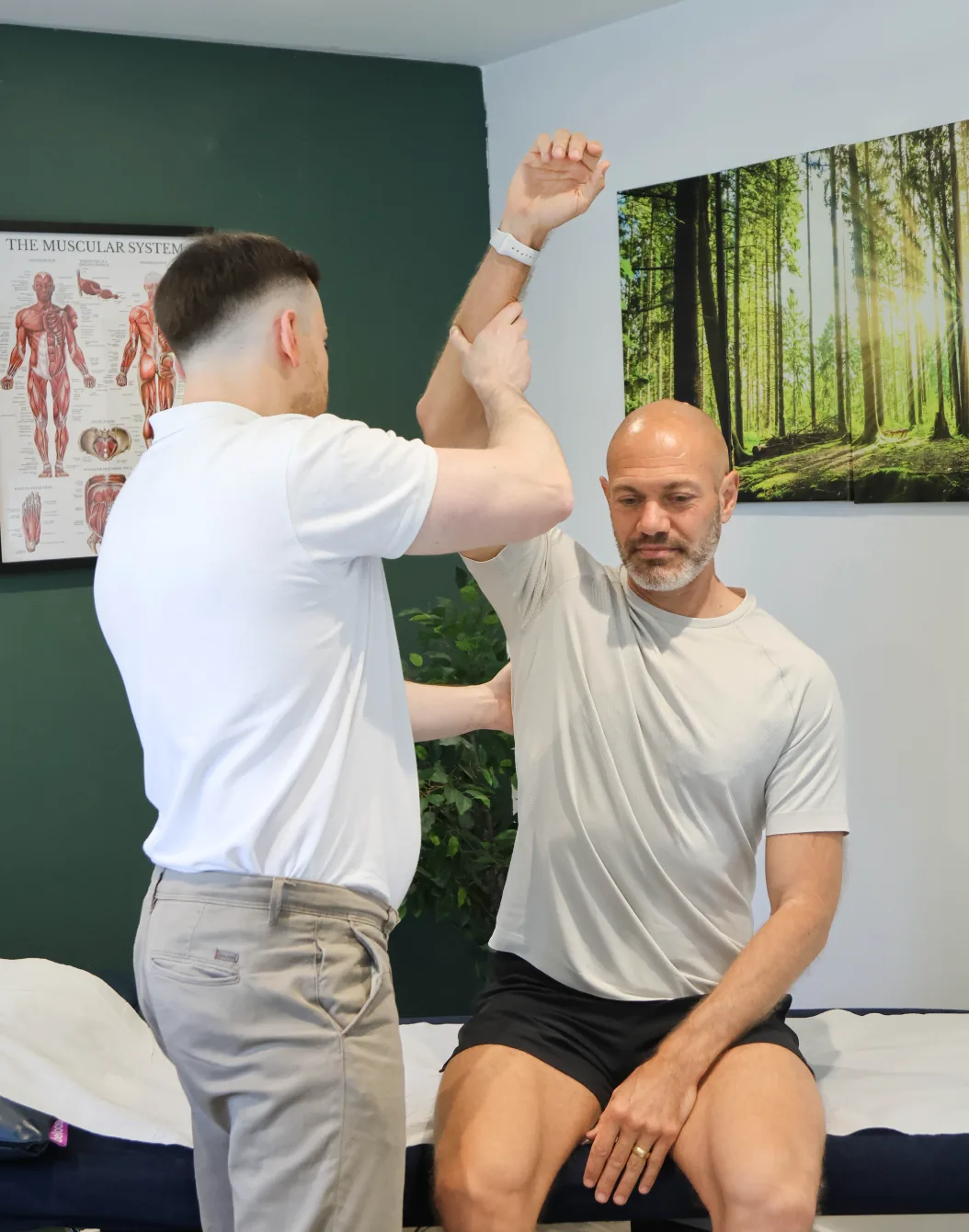






Steph's feedback after her course of treatment was straightforward. It felt like being listened to. Previous physiotherapy had felt basic, a few exercises and not much else.
That is not a criticism of the individuals involved. Give anybody fifteen minutes and a waiting room and you get fifteen minutes of treatment. It is a criticism of a model that assumes pain can be understood without understanding the person carrying it.
Why fifteen minutes is not enough
The difference is not a special technique. It is time, and a willingness to accept that pain exists inside a life rather than in isolation. How somebody sleeps, what their week actually looks like, what they have been told previously and what they now believe about their body all shape what treatment can realistically achieve.
None of that replaces good clinical assessment. You still need to know what structure is involved and what it tolerates. It sits alongside that work rather than instead of it.
What was keeping it going
In Steph's case the physical findings were relatively unremarkable, which is precisely why previous treatment had gone nowhere. The things maintaining her symptoms were largely outside the area that hurt.
How to tell if you are being heard
You should leave a physiotherapy appointment understanding your own problem well enough to explain it to somebody else. If you cannot, something in the conversation was missing.
If you have had a similar experience, there is a practical test for your next appointment, wherever you go. Notice whether anybody asks you about anything beyond the painful area.
Those are not small talk questions. They shape what treatment can achieve and their absence is usually why the last course of treatment did not hold.